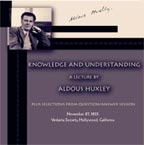
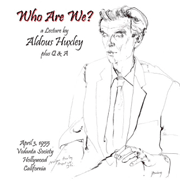
Aldous Huxley, Who Are We?
CD*
Lecture plus Question/Answer
session
(Also
CLEARANCE Version: Aldous
Huxley Who Are We? CD.
Duplicated Discs in Paper Sleeve Read
More)
Talofa: Music of Samoa CD
A 1976 cultural preservation
project by the Samoan Department of Education
I
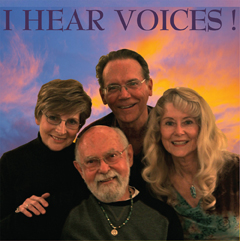
Hear Voices!is
a unique vocal quartet.
What sets the group apart is their choice to perform
and record with only a rhythm guitar and no other
instrumental presence. The
material includes traditional folk spirituals as well
as original contemporary compositions.
I
Hear Voices! with StringsThe
unique vocal quartet is sweetened with lush musical
accompaniment. The
material includes traditional folk spirituals as well
as original contemporary compositions.
See
Also GraceNotes
for MUSIC CDS Gospel,
Traditional, Fusion & World Music PLUS Music DVDs
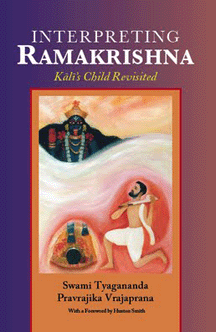
This 173 page article by Swami Tyagananda and Pravrajika
Vrajaprana of the
Ramakrishna Order is a precursor to a more extensive book, Interpreting
Ramakrishna: Kâlî's Child Revisited, coming this
fall, that examines the accuracy of J. Kripal's assertions laid out in
his book Kali's Child. Swami Tyagananda is the head of the
Vedanta Society of Boston and the Hindu Chaplain at MIT. (The
file is approximately 500K.)
(Self-)Indulgences Embedded YouTube Videos. just
click & play. (Opens
a new window in the mondayMEDIA site)
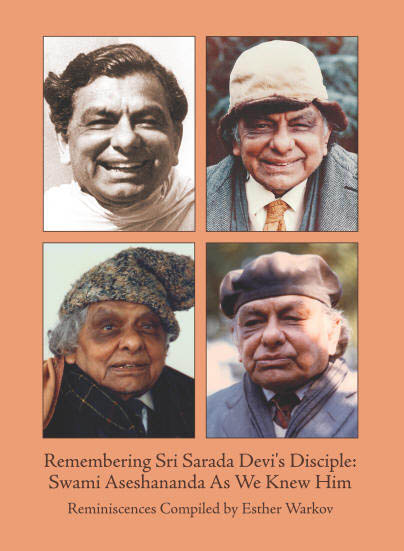
A collection
of stories of first-hand experiences with Swami Aseshananda, a senior monk
of the Ramakrishna Order and a disciple of Sri Sarada Devi (Holy Mother).
For those who knew him, this these reminiscences bring him back vivid
memories. For those who have never met him, this book brings the character
of a realized Holy man to life.
Interpreting Ramakrishna is a substantial and conscientious work of scholarly and religious reflection, the best resource we have for understanding Sri Ramakrishna today. Instigated by recent debates about Ramakrishna’s identity and significance, the book fruitfully invites us to step back and take a much longer perspective, noticing a century’s worth of Ramakrishna scholarship by devotees, monastic writers, and academic scholars. But the book also looks forward to how we — with all our varied interests and perspectives — can most fruitfully reflect on Ramakrishna in the 21st century. We can only thank Swami Tyagananda and Pravrajika Vrajaprana for showing us how to remember, think clearly, and write constructively about Ramakrishna, with an honesty that is critical, unpresuming, and in fact deeply spiritual.
—Francis X. Clooney, S.J.
Parkman Professor of Divinity, Harvard Divinity School
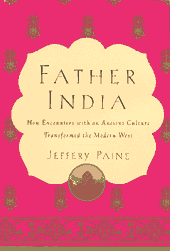
Collectible Books by Jeffery Paine,
signed by the author
About Father
India: "I don't quite know how Jeffery Paine has done it - except by subtle and provocative genius - but FATHER INDIA is an utterly surprising and indispensable book ... Learned ... Lively ... It renders Jeffery Paine's vast knowledge intimately. FATHER INDIA is a splendid achievement." - Howard Norman, author of The Bird Artist
First edition, signed by the
author, out of print
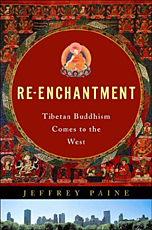
About Re-enchantment:
Memorable anecdotes, great storytelling and keen observations
mark this cogent exploration of the explosive growth of Tibetan
Buddhism in the West. Paine offers chapters on many famous
Tibetans, including the Dalai Lama (who, refreshingly, doesn't
appear until nearly the end of the book), the pioneering Lama
Yeshe, who first taught Westerners, and the controversial rogue
playboy Chogyam Trungpa, Yeshe's character foil. Other chapters
profile Westerners who discovered Tibetan Buddhism, like Tenzin
Palmo (formerly a Cockney London girl named Diane Perry), who
meditated alone for 12 years in an Indian cave and American lama
Jetsunma (Catherine Burroughs), a much-married "tough bird
from Brooklyn" who was the first Western woman to be
recognized as a tulku (reincarnated Buddhist figure). -
Publishers Weekly
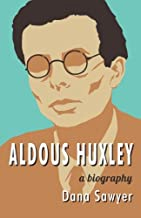
Laura Huxley herself said to
Sawyer [paraphrased], "Out of all the biographies written
about Aldous, this is the only one he would have actually
liked." With emphasis on philosophical studies and works, it
is the definitive source for understanding Huxley's influence and
ideas.
I enjoyed the book. When I read
it, I felt that the author was a close friend of Huxley's. If any
reader plans on reading any books by Huxley, please read this
informative, well-written biography first.
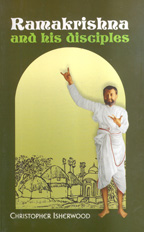
Christopher Isherwood's
Ramakrishna and His Disciples is a painstakingly researched and
vetted, scrupulously authoritative biography of Ramakrishna. It is
in some respects a trimmed version of Swami Saradananda's more
demanding 1376 page Sri Sri Ramakrishna Lilaprasanga (Sri
Ramakrishna, The Great Master). Isherwood's version is
masterfully crafted and a great introduction to Ramakrishna for
Western readers as well as an inspiring read for longtime
practitioners and sophisticated students.
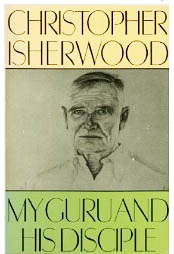
"In some ways, Isherwood's most ambitious book.
There is a sense of wholeness and of the joy of spiritual quest.
We can believe such a believer." -- Richard Dyer, The
Boston Globe
"My Guru and His Disciple is a classic of spiritual
literature." -- Kirkus Reviews
NOT SIGNED
Christopher
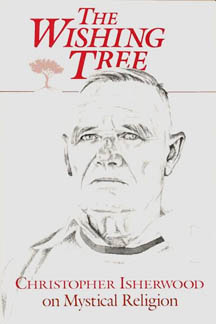
Isherwood's The Wishing Tree (purchase
page under construction)
Gifted novelist and playwright Christopher Isherwood examines the whole question of religion in this collection of short articles that explore Vedanta philosophy in a personal way.
KIRKUS
REVIEW WRITES
Novelist
(A Single Man), playwright (I Am a Camera), and author of
the stories on which the musical/film Cabaret was based,
Isherwood is also famed as a student of Vedantic (Hindu)
philosophy; his My Guru and His Disciple is a classic of
spiritual literature. Here is a fascinating collection of articles
Isherwood wrote for the house organ of, and books published by,
the Vedantic Society of Southern California--personal, reflective,
moving essays on "How I Came to Vedanta," the great guru
Ramakrishna, "What Vedanta Means to Me," etc. that
gently nudge the reader towards an understanding of Eastern
thought. As lean and elegant as Isherwood's better-known work,
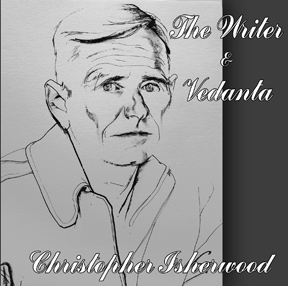
these pieces bristle with provocation (in The Writer and
Vedanta: ". . .of all characters, the saint is the most
interesting. He is the most interesting because he is the most
flexible. . .").
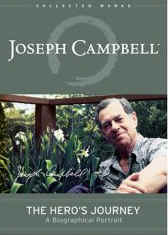
"And so Galahad decided that it would be a disgrace to set off on a quest with the other knights. Alone he would enter the dark forest where there was no path.
This is the myth of the Hero’s Journey."
A 77-minute
documentary about Daisetz Teitaro Suzuki (1870-1966), credited with
introducing Zen Buddhism to the West.
Along with Gary Snyder, there are exclusive interviews of many people
respected in their own right who knew D.T. Suzuki in person, including his
secretary Mihoko Okamura, and rare footage of Thomas Merton, John Cage,
Erich Fromm, and Suzuki himself.



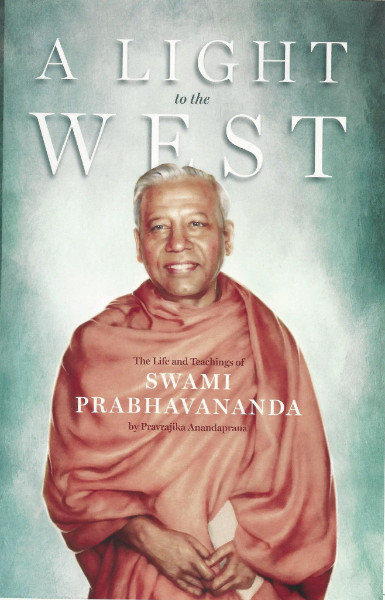


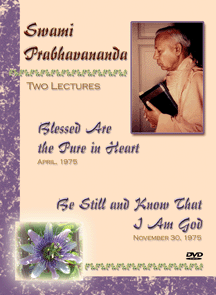 Swami Prabhavananda, 2 Lectures:
  Swami
Prabhavananda
Swami
Prabhavananda 





 BOOK:
BOOK: 

 The
Hero's Journey
The
Hero's Journey


